
Andrew Carnegie — The Industrialist of Intention
Nov 25, 1835
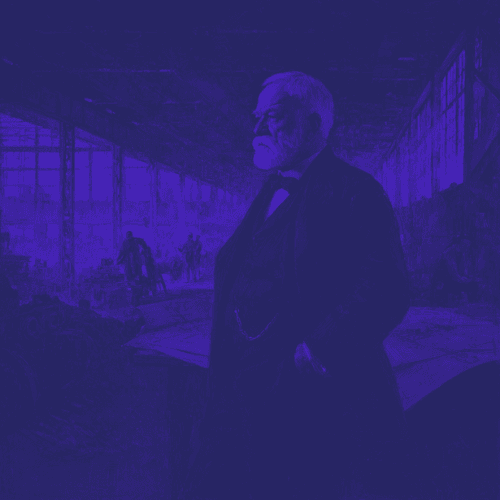
Andrew Carnegie — The Industrialist of Intention
Andrew Carnegie was born in 1835 in a modest stone cottage in Dunfermline, Scotland. His family immigrated to the United States in search of a better life, and young Andrew began working at the age of 13 in a Pittsburgh cotton factory. Through fierce determination, strategic investments, and a sharp intellect, Carnegie built a steel empire that made him one of the richest men in history. But it was not his wealth that secured his legacy—it was how he gave it away.
Carnegie believed that wealth was a trust, not a trophy. He saw money as a tool to uplift civilization, not merely enrich the self. In his seminal essay The Gospel of Wealth (1889), he argued that the rich are “mere trustees” of their fortunes, obligated to distribute their resources in ways that empower others and build a better world. True to his word, Carnegie gave away over 90% of his fortune—more than $350 million by the time of his death in 1919.
He funded over 2,500 public libraries across the globe, endowed universities, built music halls, established scientific research institutions, and created the Carnegie Foundation for the Advancement of Teaching. But his giving was not scattered—it was systematized, intentional, and deeply aligned with his values. He believed in giving during one’s lifetime, so the giver could ensure the impact was meaningful and effective.
What this says about the great tithing.
The Great Tithing movement finds a forefather in Carnegie—a man who showed the world that great wealth is not the pinnacle of achievement, but the beginning of responsibility. His life reminds us that giving is not a loss—it is the highest form of power exercised with grace.
Andrew Carnegie — The Industrialist of Intention
Nov 25, 1835
Andrew Carnegie — The Industrialist of Intention
Andrew Carnegie was born in 1835 in a modest stone cottage in Dunfermline, Scotland. His family immigrated to the United States in search of a better life, and young Andrew began working at the age of 13 in a Pittsburgh cotton factory. Through fierce determination, strategic investments, and a sharp intellect, Carnegie built a steel empire that made him one of the richest men in history. But it was not his wealth that secured his legacy—it was how he gave it away.
Carnegie believed that wealth was a trust, not a trophy. He saw money as a tool to uplift civilization, not merely enrich the self. In his seminal essay The Gospel of Wealth (1889), he argued that the rich are “mere trustees” of their fortunes, obligated to distribute their resources in ways that empower others and build a better world. True to his word, Carnegie gave away over 90% of his fortune—more than $350 million by the time of his death in 1919.
He funded over 2,500 public libraries across the globe, endowed universities, built music halls, established scientific research institutions, and created the Carnegie Foundation for the Advancement of Teaching. But his giving was not scattered—it was systematized, intentional, and deeply aligned with his values. He believed in giving during one’s lifetime, so the giver could ensure the impact was meaningful and effective.
What this says about the great tithing.
The Great Tithing movement finds a forefather in Carnegie—a man who showed the world that great wealth is not the pinnacle of achievement, but the beginning of responsibility. His life reminds us that giving is not a loss—it is the highest form of power exercised with grace.